
Suffragette
Director: Sarah Gavron; Main Cast: Carey Mulligan, Anne-Marie Duff, Helena Bonham Carter, Ben Whishaw, Romola Garai, Brendan Gleeson, Meryl Streep;
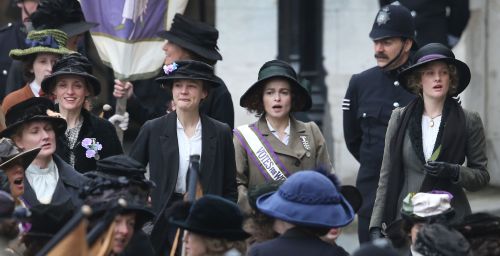
Heartfelt and compelling story about a fight for fundamental rights (one of many in human history) seen through the eyes of Maud (Mulligan), who goes from downtrodden worker bee in a industrial laundry and submissive wife to staunch supporter and activist of the Women’s Social and Political Union at the beginning of the twentieth century. Mulligan’s character evolves slowly, spurred by another worker, Violet (Duff), recently arrived at the laundry, and then charmed by collected, singleminded Edith (Bonham Carter), a local medical doctor. Maud is capable and smart, hard worker and loving mother but she has been told all her life that she will never amount to anything (both with words and violence) and that made her submissive and scared. However, once Maud glimpses another way of approaching life, seeing women like her stand up for themselves and fight, she starts to find her inner strength and becomes an activist. Everything begins with a public hearing of a MP’s committee for women’s enfranchisement: Maud gives a matter-of-fact but convincing testimony of her life as worker. From that moment on, the audience dives, along with Maud, in the activities of the women’s movement that, incited by their charismatic leader Emmeline Pankhurst (Streep), are taken up a notch. What follows is a series of historical documented actions: firebombing of letterboxes, blowing up empty country estates, hunger strikes during imprisonment and Emily Davison’s martyrdom at the Epsom Derby. As we follow the struggle of these women to see recognised their right to vote, we get to know also the minds of the men. Unfortunately they aren’t portrayed in a positive light. Sonny (Whishaw) is Maud’s rather spineless husband, who kicks her out of their house because of peer-pressure from colleagues and acquaintances; inspector Steed (Gleeson) is the armed response of the Government, trained to deal with anarchists, bolsheviks and Irish insurgents, who treats these women as a dangerous threat to society. The supervisor at the laundry is downright vicious and the various Government’s officials are patronising, dismissive or out for blood and all very vague entities. The only redeeming male figure is Edith’s husband, who supports and protects her as much as possible. Unfortunately he’s a very marginal character in the story, which is a pity because it would have added an interesting point of view. Sarah Gavron’s film is engaging and show us historical events that are very seldom shown at the cinema. Carey Mulligan’s performance conveys both strength and vulnerability very effectively and she’s helped by a solid supporting cast. Illuminating —7.5/10
Filed under Seen at the cinema


Quick ‘n’ Dirty: January at the pictures
In a vain attempt to keep up with all the films I watch I came up with this new series of posts. The idea is to bundle up speedy reviews of the movies I saw at the cinema and at home for which I have neither the time nor the inclination to write a full critique. The posts will be distinguished in two types: “at the pictures” and “at home”. So, without further ado, here’s January selection of films:
The Lobster: intrigued by a quirky trailer and some good reviews, I went in with high expectations for a captivating indie movie with a great cast. I came out sorely disappointed and confused. The film starts with an engaging premise of a near future society with a little twist in its social mores but, then, it loses momentum making the plot more complicated and without a clear direction or thesis. Colin Farrell and Rachel Weisz gives solid performances but it’s not enough. Missed opportunity —4/10

Black Mass: it aspires to be a new Goodfellas but doesn’t have the guts to go all the way. Irish mob in the seventies fights the competition with the help of complacent FBI agents: it sounds good on paper but it doesn’t fully deliver. Johnny Depp’s chameleonic transformation into James “Whitey” Bulger, who ascends from petty criminal in South Boston to FBI’s most wanted status, is convincing but lacks bite. Notwithstanding the efforts of a great cast, Joel Edgerton and Benedict Cumberbatch in particular, the film has an uneven pace and not enough tension to win me over. I wonder what Scorsese would have done… oh wait, he made The Departed! No guts, no glory —6/10

The Hunger Games: Mockingjay part 2: typing this long title makes me already weary! First off: splitting the last part of a trilogy in two just to milk every possible dime from the audience is not cool, especially when there’s no real need for it. The story picks up exactly where it left off but a year of waiting it’s way worse than commercial breaks to get back into the rhythm and care for the characters. So Katniss and her ragtag gang of heros need to kill President Snow to finally end the civil war in Panem and it seems that they go at it all the wrong ways; I haven’t seen so many useless deaths since George Clooney’s in Gravity. Anyway, the good guys wins but there’s a price to pay…duh! It felt flat and unengaging and the multiple endings do not help. Watch on TV —5/10

The Big Short: Adam McKay takes on the not easy task to explain the root causes of 2008 financial crisis using as a starting point the eponymous book wrote by Michael Lewis. He takes a few liberties with the source material but he succeeds in getting through the most important facts and information with clever and funny breaking-the-forth-wall speeches and using Ryan Gosling’s character as guide for the audience. With a stellar ensemble cast at his disposal, McKay skillfully tells the story of a few individuals who saw the end of the real estate bubble coming and all the problems connected with financial derivative products. Despite the complicated and, some might say, dull subject the film is well-paced and funny with convincing performances. Special kudos to Christian Bale! Relevant and entertaining —7.5/10

Filed under Seen at the cinema
Sound & Motion Pictures: great duel scenes
As my first entry of 2016 in my Sound & Motion Pictures series I decided to revisit great combination of music with duel/fighting scenes. Sometimes it is the music itself that make all the difference and changes a rather normal fight in something more, other times it just underline the tension of the images or the combination of the two is so perfect that you cannot really tell what makes the scene special. Here’s my list of favorites, hope you enjoy it as much as I do!
1) Colonel Mortimer vs. Indio – La Resa Dei Conti, Ennio Morricone (1965)
There are many great duels in Sergio Leone’s oeuvre but this is my all time favorite. The chime is so haunting and from a device of hideous sport becomes a means of retribution. Ennio Morricone strikes again!
2) The Bride vs. O-ren Ishii – Please Don’t Let Me Be Misunderstood, Santa Esmeralda (1977)
This is Tarantino’s version of a Leone’s duel with oriental flavour, on the notes of a very up-beat cover of Please Don’t Let Me Be Misunderstood with a flamenco component… just perfect!
3) Neo vs. Morpheus – Leave You Far Behind, Lunatic Calm (1998)
Techno music as soundtrack for a kung fu showdown (even an amicable one) is a radical choice. The Wachowski siblings have changed the way we view things a lot with The Matrix.
4) Sherlock vs. hulking guy – Rocky Road To Dublin, The Dubliners (2006)
Guy Ritchie comes up with a lot of inspired ideas in his movies and this fight is a great example: slow-motion and regular speed to show a bare-knuckle boxing match with an Irish traditional song to keep the blood pumping!
5) Obi Wan & Qui Gon Ginn vs Darth Maul – Duel of the Fates, John Williams (1999)
Although The Phantom Menace is my least favorite movie of the Star Wars saga, this duel is pretty awesome mostly because of Darth Maul, a pretty cool but very underutilised villain. John Williams’s score is effective and stirring.
Filed under Odds and ends, Sound & Motion Pictures
Me and Earl and the dying girl
Director: Alfonso Gomez-Rejon; Main Cast: Thomas Mann, RJ Cyler, Olivia Cooke, Nick Offerman, Connie Britton, Jon Bernthal;
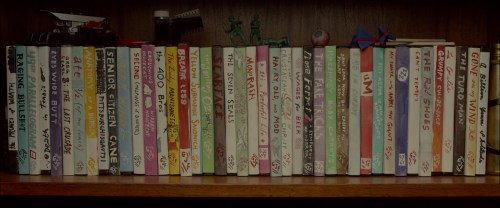
Greg (Mann) has successfully navigated the treacherous waters of high school until his senior year by being a chameleon. He cleverly adapted to the social mores of each clique thus remaining virtually invisible and unscathed. His best and only friend since childhood, Earl (Cyler), is laid-back and unfazed by the high school life; they share a passion for movies, in particular classics, instilled by Greg’s father (Offerman), an eccentric professor of sociology. Their favorite pastime is to remake them or “swede” them (you should watch Be Kind Rewind, to understand this) with, of course, poor man’s methods and interesting results. Greg’s quiet life is forever changed when his mother (Britton) guilt-trips him into befriending Rachel (Cooke), a girl who attends his school and has been recently diagnosed with leukemia. What follows is a very authentic and captivating tale of friendship (no soppy, tear-jerker love story a la The Fault In Our Stars), that is, in turns, charming, funny, awkward and raw. Greg is forced out of his protective shell by hanging out with Rachel at school, learning to be part of its micro-society and experiencing the (most of the time) traumatic consequences of being noticed. Rachel, on the other hand, becomes part of Greg and Earl’s private world and enjoys watching their masterpieces while she has to endure cancer treatments. This film is a well-written, perfectly-casted coming-of-age story with a nice dose of sarcasm and humour that balances its darker and more gut-ranching moments. I haven’t seen a film about teenagers so insightful and charming in a while. The three young leads give very convincing performance and carry the film on their shoulders from start to finish. Among the adult cast special kudos should go to Nick Offerman as Greg’s oddball father, a joy to watch! Alfonso Gomez-Rejon’s second time in the director’s chair is a success and well-worth your time. Beguiling —8/10
Filed under Seen at the cinema

Network (1976): January Blind Spot
Director: Sidney Lumet; Main Cast: Faye Dunaway, William Holden, Peter Finch, Robert Duvall, Ned Beatty;
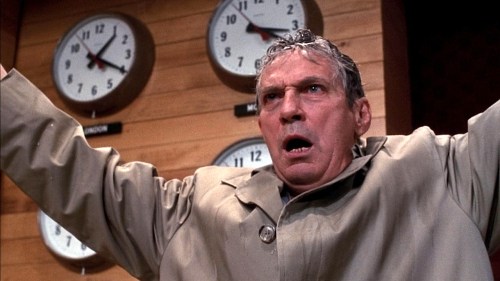
Television is indeed a cut-throat world. Network and corporate executives exploit the mental break-down of a veteran news anchorman for the sake of ratings and monetary return. Summarised in this way, the film sounds like a jaded, cynic view of TV news in the seventies but it is so much more! It manages to introduce some surreal elements into a serious and realistic narrative that becomes one of the harshest criticism of television, entertainment and business world. Furthermore it uncannily predicts what happens to television in the next forty years: reality shows, exploitation of the worst gory events to improve ratings and such. Faye Dunaway show a wonderful combination of fanatical glee, workaholism and sheer determination as Diana Christensen, the producer who takes the reins of the news section of the network. She replaces Max Shumacher (Holden), an old-timer with integrity and also personal friend of Howard Beale (Finch), the anchorman in question. Beale’s ravings are illuminating and still actual (and downright hilarious) and Finch is fantastic to watch, no wonder he has got an Oscar for this role. To add more quality to an already stellar cast there’s Robert Duvall as Frank Hackett, face of the corporation, that recently bought the network, and ultimate shot-caller. His character might come across as one-dimensional, only driven by quarterly returns and stockholders’ expectations but Duvall manages to imbue him with some vulnerability that makes him more credible. The heart of the film is Holden’s Max: a man who is going towards his twilight years and finds himself fired, rather unceremoniously. He is viewed by Hackett as the past in TV news and he is considered both expendable and a threat to the network. All of this because Max refuses to use his friend Howard as freak-show to be paraded in front of millions of people. Max is the only silver lining of the film: someone who clings to his humanity (both the good and the bad) and doesn’t surrender and turn into a humanoid like Diana. Lumet’s directing is flawless and inspired and Paddy Chayefsky’ s script is pure gold. My favorite scenes are: Arthur Jensen’s (Beatty) speech about the primal forces of Nature and the contract negotiation between the far-left-wing revolutionaries, the communist activist and the network representatives; both are hilarious and amazing. Riveting —9/10
This is my first entry to The Matinee‘s Blind Spot blogathon. So far so good!

Filed under Blind spot series, Oldies but goldies, Seen at home
Blind spot series 2016

As cinematic resolution for this year, I’ve decided to join the Blind Spot Series, a pretty nifty blogathon organised by Ryan@TheMatinee. The rules are quite simple: pick 12 films (one for each month) that you haven’t seen before and post a write-up about them. Easy, right?! Well, choosing the movies from my ever-growing to-watch list has been tough but I managed. So, without further ado, here’s my selection:
January: Network (Sidney Lumet, 1976)
February: Steamboy (Katsuhiro Otomo, 2004)
March: El Secreto de sus Ojos (Juan Jose Campanella, 2009)
April: The Loneliness of the Long Distance Runner (Tony Richardson, 1962)
May: Bande a Part (Jean-Luc Godard, 1964)
June: Deliverance (John Boorman, 1972)
July: Restrepo (Tim Hetherington, Sebastian Junger, 2010)
August: La Regle du Jeu (Jean Renoir, 1939)
September: Primer (Shane Carruth, 2004)
October: Zabriskie Point (Michelangelo Antonioni, 1970)
November: The Night of the Hunter (Charles Laughton, 1955)
December: Los Abrazos Rotos (Pedro Almodovar, 2009)
Filed under Odds and ends, Seen at home


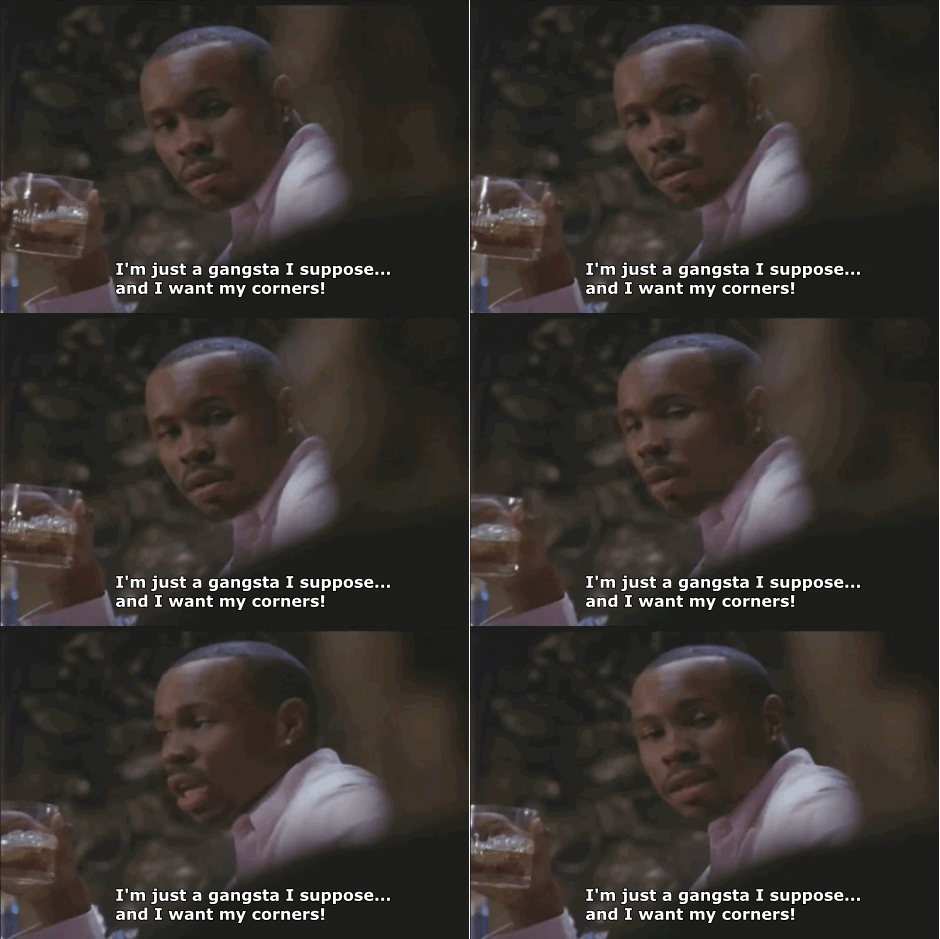


New Year’s resolution

Happy New Year to everyone!
Filed under Favorite quotes of the moment, Odds and ends


 Ramblings of a cinephile